Backyard burial or cremation in Pinellas County: what the rules say
Published November 6, 2026

It's Saturday morning and your pet died at home overnight. You are standing in the backyard with a shovel, looking at the shady patch along the fence where your pet liked to sleep. Before you dig, you want to know what the rules say about doing this here.
The short answer: Florida's rules set conditions for burial: on the property where your pet died, at least 2 feet down, above the water table. We could not find a specific Pinellas County rule on backyard burial, but some cities have dead-animal rules, so check with the county and your city. Cremation with us is the other option.
What Florida law says about a pet in your backyard
Section 823.041 of the Florida Statutes says that when a domestic animal, which includes dogs and cats, dies of disease, the owner must burn the body or bury it "at least 2 feet below the surface of the ground." It also makes it a second-degree misdemeanor to dump a domestic animal's body on a public road or right-of-way, or anywhere animals or birds can eat it.
For a pet who did not die of disease, Rule 62-701.520 of the state's administrative code allows burial "on the property where they died, or other properties approved of by the Department," at least two feet down and above the water table. It also lists burning and a Class I landfill. The Florida Department of Environmental Protection's 2018 guidance applies the same conditions to a pet who died of disease, and says it covers euthanasia too.
If your pet died at home, the yard you are standing in may be the property that wording describes, but the local rules and the notice below can still apply, so please read them before you dig.
Pinellas County and city codes we checked
We could not find a specific Pinellas County rule on backyard pet burial. On November 4, 2026, we searched the county code for dead animals, carcasses and burial, and found no section on a grave at home. Two county rules do touch on this.
Under Section 14-40, which covers the whole county, a dog or cat that dies or is euthanized while under quarantine must be examined by the state health department, and refusing to surrender the body is a violation. If your pet recently bit or scratched someone, ask Pinellas County Animal Services before you bury. Section 90-6 says no one may deposit the skeletal or cremated remains of any species on county-owned or managed land without a permit for scientific research.
Three cities we checked have their own sections:
- Clearwater: Section 8.06 says an owner must have a dead animal removed, within 12 hours of the death, to a place designated by a city police officer.
- Largo: Section 20-35 says the city picks up small dead animals, such as dogs and cats, at no charge. The city can tell you how it works.
- St. Petersburg: Section 4-3 says the city must be notified immediately when anyone finds the body of a dead animal, and that a city official arranges removal.
None of these mentions backyard burial, so we cannot tell you how they apply to a grave on your own land. Check with your city and the county before you dig, because rules change. This is general information, not legal advice.
If your pet was euthanized, depth protects wildlife
The Florida Department of Environmental Protection's guide for pet owners says a body that is not buried properly can attract wildlife, especially eagles and other birds of prey. It adds that if your pet was euthanized, "the body contains chemicals that can sicken or even kill wildlife." It says you must bury at least 2 feet deep and that "4 to 6 feet is optimal."
The American Veterinary Medical Association reported in 2003 that the FDA was adding a warning to pentobarbital euthanasia labels. The warning calls for "deep burial, incineration, or other method in compliance with state and local laws," and the article lists shallow graves among the causes of wildlife poisonings.
This does not rule out burial. Your veterinarian can talk through your options, and depth is the part to plan for at that patch along the fence.
Questions to answer before you dig in your backyard
The state rule requires the grave to be above the water table. A 1985 U.S. Geological Survey report on Pinellas County found the water table generally less than 5 feet below the surface. It ranged from at or near the surface along the coast and in flat, poorly drained areas to more than 10 feet in high, well-drained areas, and moved about 1 to 4 feet with the seasons. That report is old and countywide, so it cannot speak for your yard.
Think about whether that patch holds water after a hard rain, and what you would do if the hole started to fill.
Then there is what runs under the ground. Florida's underground utility law requires notice at least 2 full business days before digging, and its exemption for homeowners stops at a depth of 10 inches, well short of a 2-foot grave. Sunshine 811 says to always contact it before you dig, at 811. On a Saturday, those business days have not begun.
If you rent, or have homeowners association rules or deed restrictions, please check those too. And if you moved one day, think about what leaving this spot would mean to you.
Cremation with us, if you choose it instead
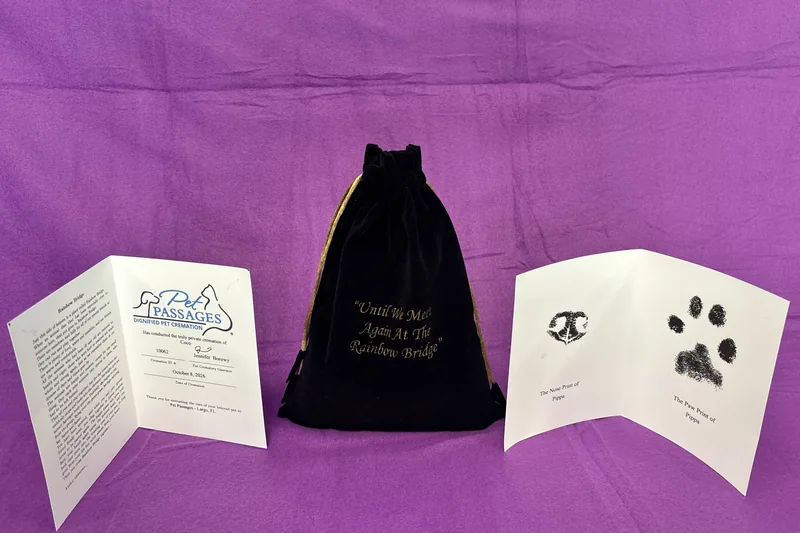
Burial is a legitimate and loving choice. Cremation is the other option, and here is what it involves with us. Every cremation is performed here in our own private crematory, by our own team.
In Truly Private, your pet is the only pet in the cremation unit. In Semi-Private, more than one pet is cremated at the same time, kept separate by our stainless steel partitioning system. With both, your pet's ashes are returned to you. In Basic (aka Batch), many pets are cremated in a group without partitions and no ashes are returned.
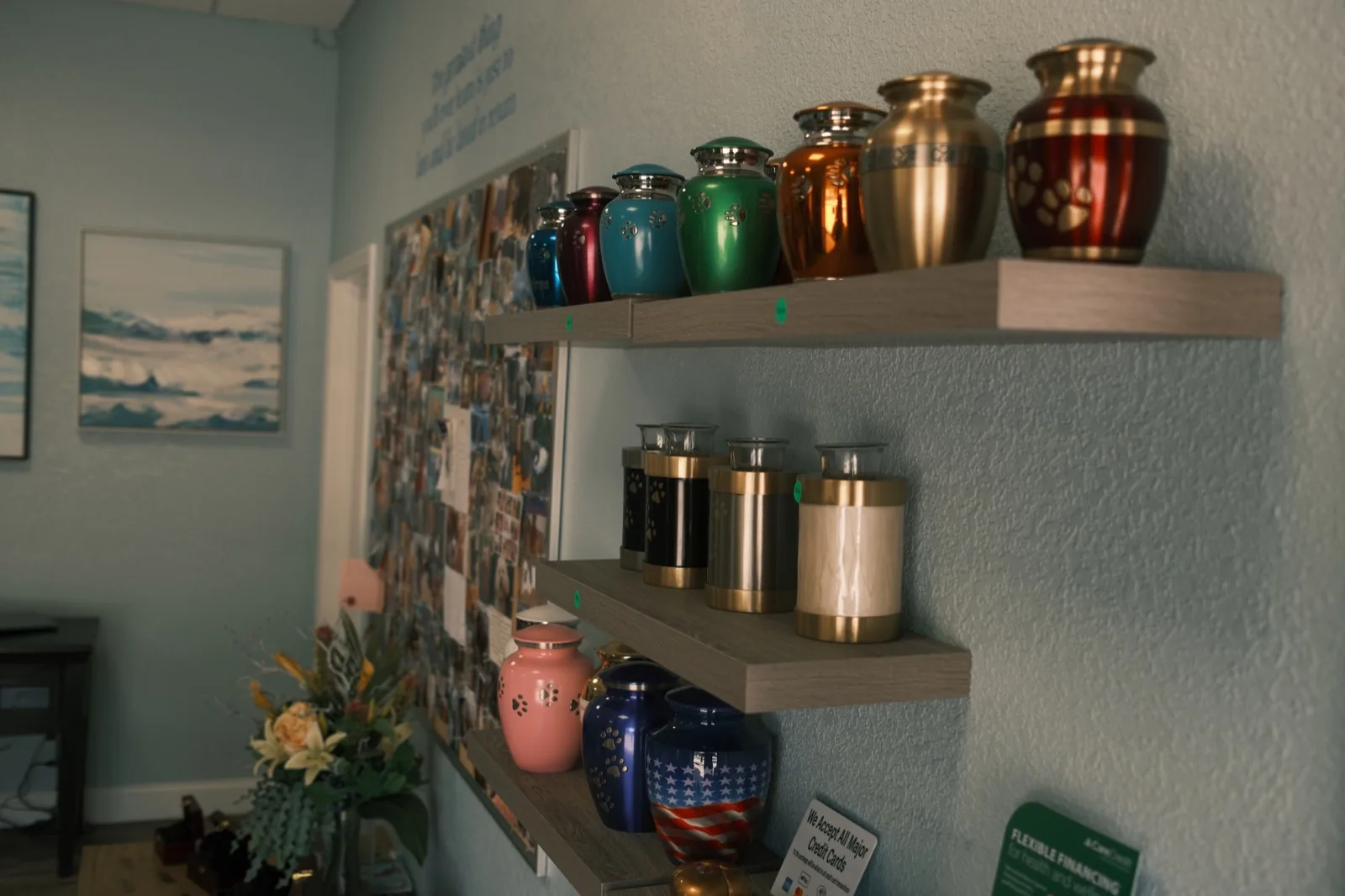
For a pet up to 20 lbs, those packages are $215, $155 and $60. Package prices do not include sales tax, and our cremation prices show every weight and the pick-up fees. When ashes are returned, our promise is a 72 hour (3 business days) return of your pet's cremated remains, from the time we received your pet in our care.
If a place to visit is part of why you were looking at that patch along the fence, ashes can have a place too. The American Veterinary Medical Association lists scattering a pet's ashes, or placing them in a garden or a decorative urn, among the ways to remember a pet, though the county land rule above still applies. Our Remembrance package includes a "Blooming Heart of Remembrance" to plant in a special place where flowers will grow in memory of your pet.
You do not have to settle this alone in that yard with the shovel in your hand. You can call your city, your veterinarian or Sunshine 811, and you can call us at 727-272-8504. We are available by phone 24/7, and we will explain the options and leave the decision to you.
Questions families also ask
How deep do you have to bury a dog in Florida?
At least 2 feet below the surface of the ground and above the water table, under Florida's rules. The state's guide for pet owners adds that 4 to 6 feet is optimal, whether the grave is in your yard or a pet cemetery.
Can I bring my pet home from the vet and bury them in my yard?
The state rule refers to burial on the property where the animal died, or on other properties approved by the Florida Department of Environmental Protection. We found no page on how this applies to a pet who died at a veterinary office, so please ask the department before you dig.
Does a pet cemetery have to follow the same rules?
Florida's guidance says a pet cemetery may bury animals with permission from the Department of Environmental Protection, at least 2 feet down and above the water table. For euthanized animals, it says added requirements such as deeper burial or groundwater monitoring should be considered case by case. We do not recommend or list cemeteries.